Tiny Beads, Big Statement: How a Ukrainian Necklace Became Gen Z's Answer to Throwaway Fashion
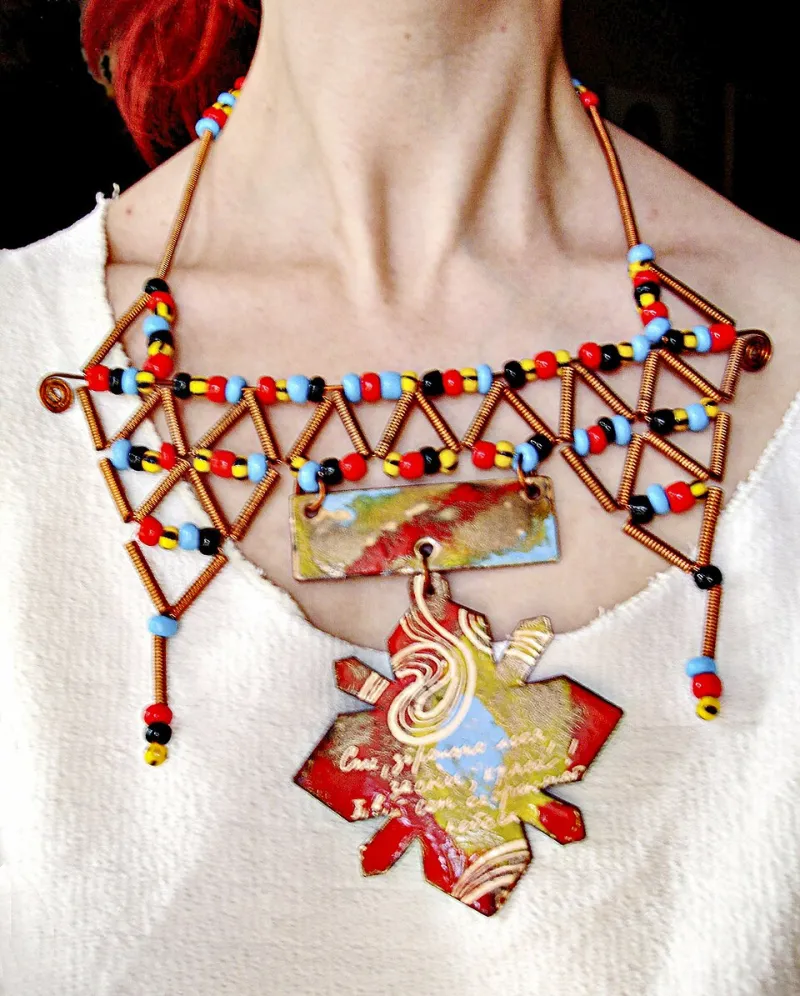
Photo: Lyudamy, CC BY-SA 4.0, via Wikimedia Commons
Somewhere between a Zara haul and a landfill, a generation decided it was done. Not with fashion exactly — Gen Z still cares deeply about how they look and what they wear. But with the relentless, exhausting cycle of buy-wear-toss that fast fashion built its entire empire on? That part, a growing number of young Americans are quietly walking away from.
And weirdly, some of them are walking toward a centuries-old Ukrainian beaded necklace called the gerdan.
What Even Is a Gerdan?
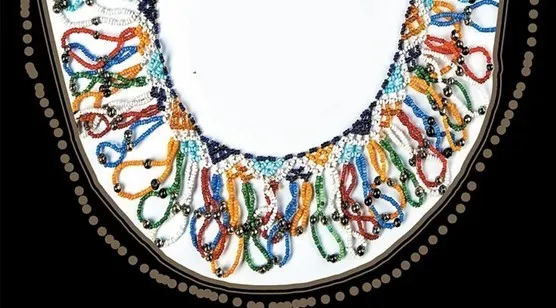
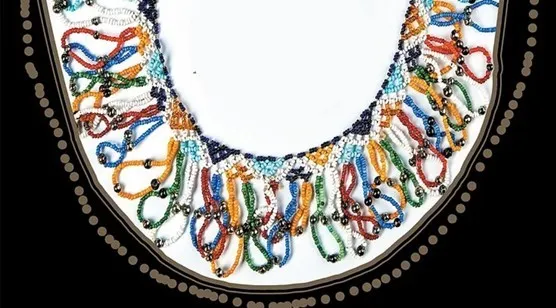
If you haven't heard the word before, you're not alone — at least not yet. A gerdan (sometimes spelled herdán) is a traditional Ukrainian collar-style necklace, woven from thousands of tiny seed beads in intricate geometric patterns. Historically, these pieces were worn during festivals, weddings, and important cultural ceremonies. The designs weren't random — specific color combinations and motifs could signal regional identity, marital status, or family lineage. Every bead had a reason to be there.
In Ukraine, the gerdan has been around for centuries. In the United States, it's been largely under the radar — until recently.
Over the past two or three years, the necklace has started appearing in unexpected places: indie craft markets in Portland, DIY tutorials on YouTube, carefully lit flat-lays on Instagram. And the people making and wearing them? Largely young Americans in their early-to-mid twenties who couldn't find Ukraine on a map five years ago but are now spending weekends hunched over beading looms, learning a craft that takes serious patience to get right.
The Fast Fashion Fatigue Is Real
To understand why the gerdan is resonating right now, you have to understand where Gen Z is emotionally with consumption in general.
This is a generation that grew up watching documentaries about garment factory collapses, scrolling past viral videos of textile waste mountains in the Atacama Desert, and absorbing the quiet guilt of a $7 shirt that fell apart after three washes. They didn't create fast fashion, but they inherited it — and a meaningful chunk of them are increasingly resentful about that inheritance.
"I got to a point where I couldn't walk into a mall without feeling kind of gross," says Maya, a 24-year-old graphic designer based in Chicago who started beading gerdans about eighteen months ago. "Everything looked the same, everything was cheap, and I knew it was going to end up in a bag at Goodwill in six months. I wanted something that felt like it actually mattered."
That desire — for objects that matter — is showing up across Gen Z consumer behavior in a dozen different ways. Thrifting. Visible mending. Buying secondhand furniture instead of flat-pack. Learning to cook from scratch. And yes, picking up handcraft traditions that require real time and real skill.
The gerdan fits neatly into that impulse. You cannot make one quickly. A single necklace can take anywhere from a few days to several weeks depending on complexity. There are no shortcuts. The process demands focus, fine motor patience, and a willingness to undo hours of work if a pattern goes sideways. For people exhausted by instant gratification, that friction turns out to feel surprisingly good.
Cultural Reclamation Without Appropriation?
Here's where it gets a little more nuanced, because not everyone making gerdans has Ukrainian roots — and the conversation around who gets to engage with whose cultural traditions is one Gen Z takes seriously.
Natalia Kovalenko, a Ukrainian-American textile historian based in Philadelphia, has been watching the trend with a mix of pride and caution. "On one hand, it's genuinely moving to see this craft get attention," she says. "These necklaces carry so much history — they survived Soviet attempts to suppress Ukrainian folk art, they survived displacement and diaspora. For them to be appreciated by young people outside the culture feels significant."
But she's also clear about what respectful engagement looks like. "Learn the history. Understand what you're making. Don't flatten it into just a 'boho aesthetic.' If you're going to spend forty hours beading a gerdan, spend two of those hours reading about where it comes from."
For many young crafters, that's exactly the approach they're taking. Online communities dedicated to gerdan-making — there are several active ones on Reddit and Discord — tend to be heavily focused on historical accuracy and cultural context. Beginners are encouraged to research regional pattern traditions before picking up a needle. It's a far cry from the decontextualized trend-hopping that defines most fast fashion aesthetics.
The Influencer Factor (But Make It Slow)
It would be easy to assume that TikTok is driving this, and to some extent, it is — but not in the way you might expect. The gerdan content that gains traction isn't usually flashy. It's slow. It's someone's hands working through a complex pattern while a lo-fi playlist hums in the background. It's a finished piece laid out next to the materials it took to make it, with a caption that explains the pattern's regional origin.
Jasmine Tran, a lifestyle content creator based in Austin with around 80,000 followers, started posting about her gerdan-making process after a trip to a Ukrainian cultural festival last year. "I thought maybe five people would care," she laughs. "Instead it kind of blew up — not viral, but steady. People kept asking where to learn, what beads to buy, how long it took. There's a real appetite for content that shows you something taking time and effort."
That appetite makes sense in context. In a feed full of sixty-second transformations and overnight trends, watching someone slowly, methodically build something beautiful over weeks is almost countercultural. The gerdan, in a weird way, is slow content for a generation that is starting to crave it.
What You're Really Buying Into
At the end of the day, the gerdan's rise in American craft culture says something bigger than "beads are back." It reflects a generation actively interrogating the values embedded in what they own and wear. A gerdan isn't fast. It isn't cheap. It isn't disposable. It doesn't look like anything else hanging in a Shein haul.
It looks like someone cared enough to make it — and someone else cared enough to wear it.
For Gen Z, increasingly skeptical of systems that profit from carelessness, that distinction carries weight. The bead count is in the thousands. The hours are real. The history is long. And maybe that's exactly the point.