Forget Swiping Right: How Craft Nights Became the Hottest Place to Meet Someone Real
Photo: Basile Morin, CC BY-SA 4.0, via Wikimedia Commons
Let's be honest: most of us have a complicated relationship with dating apps. The endless scrolling, the carefully curated photos, the small talk that goes nowhere. It's exhausting in a very specific, modern way. So maybe it shouldn't be surprising that a growing number of Americans are logging off and showing up somewhere entirely different — a community center craft table, a yarn shop on a Tuesday night, a maker space in a converted warehouse — and finding something they weren't quite expecting. Each other.
Craft circles, fiber arts classes, and DIY studios are quietly becoming some of the most organically social spaces in American cities right now. And for singles who've hit a wall with digital dating, they're offering something that no algorithm has managed to replicate: real, unfiltered, hands-busy human interaction.
Why Screens Can't Compete With String
There's a fundamental awkwardness baked into dating apps that no redesign has fully solved. You're essentially asking strangers to evaluate each other like products before they've shared a single moment of real life. The pressure to perform — to be witty, attractive, interesting — starts before you've even said hello.
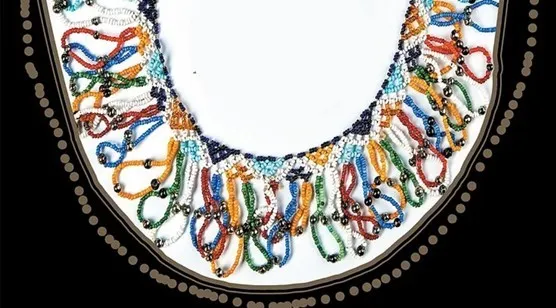
Craft spaces flip that dynamic entirely. When you walk into a beading class or a macramé workshop, you're not there to impress anyone. You're there to make something. And that shared, slightly humbling task — threading tiny beads, untangling knots, trying to follow instructions that somehow make no sense — creates a social environment that's almost accidentally intimate.
Dr. Leah Campos, a social psychologist based in Chicago who studies how environments shape interpersonal bonding, puts it plainly: "Shared struggle is one of the fastest routes to genuine connection. When two people are both bad at something together, the usual social defenses come down. You laugh at yourself. You ask for help. That's vulnerability, and vulnerability is the foundation of real relationships."
She's not just talking theoretically. Across the country, people are showing up to craft nights alone and leaving with phone numbers — and sometimes, eventually, partners.
Real People, Real Knots
Take Marcus and Priya, who met at a fiber arts open studio in Portland, Oregon, about two years ago. Marcus had gone on the recommendation of a coworker who thought he needed "a hobby that wasn't his couch." Priya had been attending for months, mostly to decompress after work. They ended up at the same table, both attempting a basic macramé wall hanging.
"I kept messing up the same knot," Marcus says. "And she just reached over and fixed it without making it weird. We talked for three hours. I didn't even finish the project."
They've been together for eighteen months. Marcus still has the unfinished wall hanging.
This kind of story is becoming less of an anomaly and more of a pattern. Yarn shops in cities like Austin, Denver, and Brooklyn report that their open-stitch nights have quietly evolved into social hubs — regulars who started coming for the craft and stayed for the community. Some shops have even started hosting specifically social craft events, leaning into the fact that their space functions as something between a bar and a class.
The Tactile Advantage
There's something worth examining about why these hobbies in particular seem to foster connection so effectively. Fiber arts — knitting, crocheting, macramé, beading, embroidery — are almost always done with your hands occupied and your eyes partly on your work. That's not a limitation. It's a feature.
Eye contact, it turns out, can be socially intense. Conversations that happen side by side, or with hands busy and gazes occasionally drifting to a shared project, often feel less pressured than face-to-face exchanges. It's the same reason people have always talked more easily in cars, or on walks. The activity gives you somewhere to put your nervous energy.
"There's a reason so many meaningful conversations happen when people are doing something else at the same time," notes relationship coach Dana Whitfield, who works with clients in the San Francisco Bay Area. "The craft gives you a neutral third thing to focus on. It takes the heat off the interaction itself, which paradoxically makes the interaction more honest."
This dynamic is especially valuable for people who find the intensity of traditional dates uncomfortable — which, according to several surveys on dating anxiety, is a significant chunk of the population.
Maker Spaces as the New Third Place
Sociologists have long talked about the importance of "third places" — spaces that are neither home nor work, where community naturally forms. Bars and coffee shops have traditionally filled this role. But a lot of Americans, particularly younger ones, are finding those environments either too loud, too alcohol-centric, or just not quite right.
Maker spaces and craft studios are stepping into that gap in interesting ways. They offer structure (you're there to make something) without rigidity (there's no agenda, no pressure to consume anything). They attract people with a shared sensibility — curious, creative, willing to try things — without requiring any particular skill level.
In cities like Nashville, Minneapolis, and Philadelphia, community craft nights have developed genuine regulars who treat the space as a weekly social anchor. Some of these groups have spawned friendships, creative collaborations, and yes, romantic relationships. The craft is almost secondary at a certain point.
Not a Gimmick — A Genuine Shift
It would be easy to frame this as a quirky trend piece, a novelty angle on dating culture. But something more substantive seems to be happening. After years of increasing social isolation — accelerated dramatically by the pandemic, but building long before it — Americans are hungry for ways to meet people that feel real and low-stakes at the same time.
Dating apps promised efficiency. What they often delivered was a strange kind of loneliness: more options, less connection. The craft circle offers almost the opposite bargain. It's slower, less optimized, completely impossible to filter or sort. You show up, you make something, you talk to whoever's at your table. It's inefficient in the best possible way.
Marcus, back in Portland, sums it up better than any algorithm could: "On apps, you're trying to seem like the best version of yourself before someone even meets you. In a craft class, they meet you while you're confused and your hands are full of string. It's just more real."
His macramé wall hanging is still unfinished, by the way. He and Priya have talked about completing it together. They haven't gotten around to it yet — they keep getting distracted talking.