Skip the Small Talk: Why Making Jewelry Together Is Gen Z's New Icebreaker
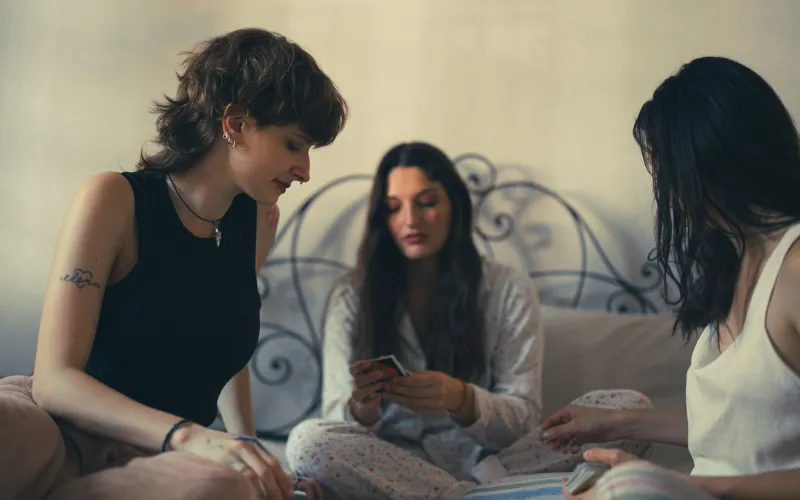
The Most Interesting Conversation You'll Have This Week Probably Won't Start With Words
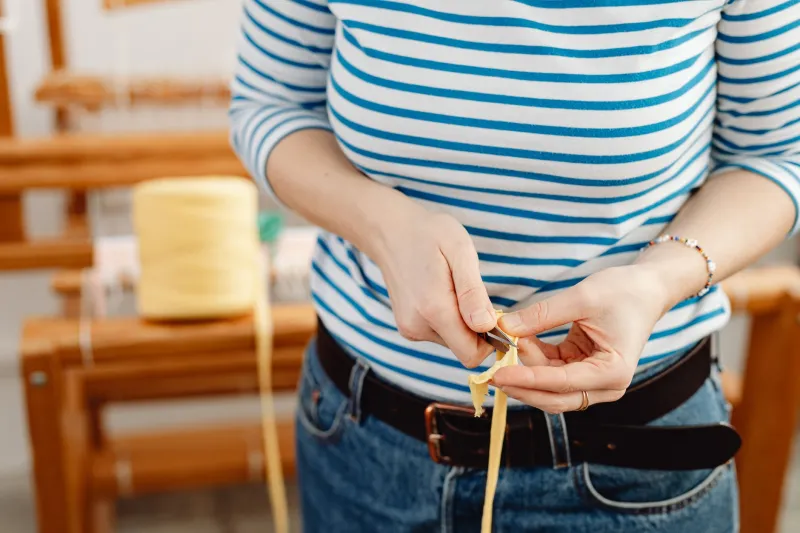
Picture this: eight people crowded around a folding table in a Chicago apartment, hands busy with embroidery floss and crimp beads, talking about everything from childhood memories to their most embarrassing situationship. Nobody planned a deep conversation. It just... happened. That's the thing about making jewelry together — the craft does the heavy lifting that small talk usually fumbles.
For a generation that grew up in the golden age of social media and somehow still feels profoundly lonely, Gen Z is quietly engineering a workaround. And it involves a lot of string.
Group Chats Aren't Cutting It Anymore
There's a certain irony in the fact that the most connected generation in human history is also one of the loneliest. Studies have repeatedly flagged elevated rates of social isolation among people in their late teens and twenties, even as their phone screens light up constantly with notifications, memes, and reaction emojis. Digital interaction, it turns out, can simulate the feeling of connection without actually delivering it.
Enter the craft circle.
Across American cities — Brooklyn lofts, Austin coffee shops, Portland community centers — informal jewelry-making gatherings are popping up with surprising regularity. They're not classes, exactly. They're more like what a dinner party might look like if the dinner was replaced by wire cutters and seed beads. People show up, sit down, and start making things. Conversation follows almost automatically.
"There's no pressure to perform," says Maya Chen, who organizes a biweekly bracelet-making night in her Seattle apartment. "When everyone's looking at their hands instead of each other, it takes the social anxiety out of the equation. People just... open up."
Maya started the group two years ago after moving to Seattle and struggling to build friendships in a city notorious for what locals call the "Seattle Freeze" — the cultural tendency toward polite distance. She'd tried bar nights, hiking groups, even a book club. Nothing stuck quite like the night she spread a bunch of hemp cord and charms on her coffee table and invited five near-strangers over.
"By the end of the night, one of those women had told me about her divorce. We'd known each other for three hours."
What Psychologists Are Noticing
This isn't just anecdote. Researchers studying social bonding have long understood that shared physical activity — particularly activity that involves using your hands — lowers psychological defenses in ways that purely verbal interaction doesn't.
Dr. Rachel Okafor, a social psychologist at a mid-sized university in Ohio who studies touch-based social rituals, describes it as "parallel play for adults." The concept, familiar from early childhood development, refers to the way young kids build comfort with each other by playing side by side before they play together directly.
"When adults engage in a shared manual task, something similar happens," she explains. "The focus on the object — the bracelet, the necklace, whatever it is — creates a kind of shared third point of attention. It diffuses the social pressure that makes new relationships feel awkward and gives people a low-stakes way to be in the same space."
She also points to the role of tactile engagement. Handling physical materials — feeling the texture of cord, the cool smoothness of a glass bead — activates sensory pathways that keep people grounded in the present moment. That presence, she argues, is exactly what's missing from most digital interaction.
"You can't be half-scrolling when your hands are busy making something," she says. "And full presence is the foundation of actual connection."
The Gift That Says What Texting Can't
But the social function of DIY jewelry doesn't end when the craft circle wraps up. There's another layer to this trend that might be even more telling: the giving.
Handmade jewelry has become a surprisingly loaded act in Gen Z's social vocabulary. Unlike buying someone a candle or a gift card, making someone a bracelet or a beaded necklace requires something that's increasingly rare — time, attention, and a decision to think about another specific person while you work.
Jordan, 24, from Nashville, describes making a necklace for his best friend after she went through a rough breakup. "I could've just sent her a Venmo with a heart emoji. But I spent like two hours picking out the beads and putting it together, thinking about her the whole time. When I gave it to her, she cried. I don't think a gift card would've done that."
This kind of intentional making — crafting with a specific recipient in mind — taps into something anthropologists have studied for centuries. Gift-giving that involves labor signals investment in a relationship in a way that purchased gifts often don't. It says: I spent my irreplaceable time on you.
In an era when attention is the scarcest resource most people have, that message lands differently.
Why String, Specifically?
It's worth pausing on the material itself. String, cord, thread, wire — the raw stuff of jewelry-making — has a long symbolic history across cultures. Gerdan, the Ukrainian word for a traditional beaded necklace worn as adornment and identity marker, is just one example of how strung materials have carried meaning across generations and geographies. From friendship bracelets traded at summer camp to the red strings of various spiritual traditions, humans have been tying themselves to each other with cord for millennia.
There's something almost primal about it. The act of weaving, knotting, and stringing creates a literal physical connection between the maker and the object — and by extension, between the maker and whoever receives it.
Maybe that's why, when everything else about modern social life feels abstract and ephemeral, people keep reaching for the most tangible thing they can find.
What This Looks Like Going Forward
Craft circles are growing. Jewelry-making kits are among the fastest-selling items in hobby retail. Instructional videos for bracelet techniques rack up millions of views on TikTok and YouTube. But the most interesting part of this trend isn't the crafts themselves — it's what they're enabling.
Young Americans are engineering analog solutions to digital problems. They're taking the loneliness question seriously and answering it not with an app or a self-help framework, but with a spool of embroidery floss and a free Saturday afternoon.
Maya in Seattle is already planning her next gathering. She's thinking about introducing a new element: everyone makes something for the person sitting next to them, someone they've just met.
"By the time you've spent an hour making something for a stranger," she says, "they're not really a stranger anymore."
Hard to argue with that.