Knot Your Average Apartment: Why Gen Z Is Hanging Macramé and Never Looking Back
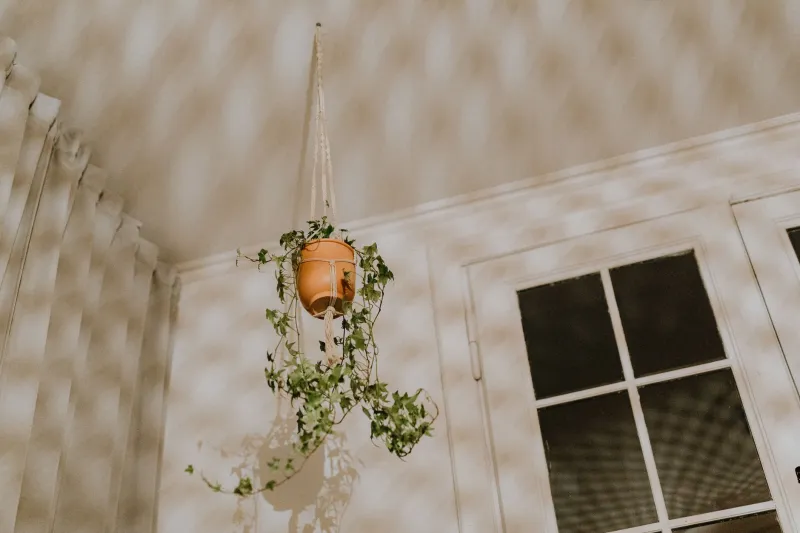
There's a corner of TikTok that smells like cotton rope and potting soil. It's populated by twenty-somethings in small apartments, perched on the edge of a bed or crouched on a studio floor, fingers working through loops and hitches with a focus that looks almost meditative. The caption is usually something like made this instead of buying one or my plant needed a home and so did I. The comments are full of heart-eyes and "tutorial please."
Macramé — that knotted textile art your grandmother might have had hanging in her kitchen circa 1974 — is having a serious moment. And it's not a fleeting trend. For a lot of Gen Z renters furnishing their first real spaces, macramé plant hangers have become a kind of entry point into something bigger: a deliberate, hands-on relationship with the stuff that fills their homes.
From Grandma's Kitchen to Your First Apartment
It would be easy to write this off as pure nostalgia, but that's only part of the story. Yes, there's something undeniably retro about macramé — it carries the warm, earthy energy of the 1970s back-to-the-land movement. But the young people picking it up today aren't just chasing vintage aesthetics. They're reacting to something specific about the world they're decorating their apartments in.
"When I moved into my first place in Portland, I went to IKEA like everyone does," says Dani, 24, a graphic designer who started making macramé hangers about two years ago. "And I stood there looking at all these identical things and thought — none of this is going to feel like me. It's going to feel like everyone else's apartment."
She went home, watched a few videos, bought a spool of cotton rope, and made her first hanger over a weekend. It's now holding a trailing pothos in her living room window. She's made eleven more since then — some for herself, some as gifts.
That tension between mass production and personal meaning is showing up again and again when you talk to young renters about why they're drawn to handmade decor. There's a specific kind of fatigue with the algorithmically curated aesthetic — the beige couch, the abstract print, the throw pillow that showed up in four of your friends' Instagram stories. Macramé offers something different: visible effort, imperfection, and the story of how it came to exist.
The Craft Economy Behind the Knot
Of course, not everyone is making their own. A parallel market has emerged around artisan macramé, with independent makers selling through Etsy and at local craft fairs doing serious business. Search "macramé plant hanger" on Etsy right now and you'll find tens of thousands of listings, many with hundreds of sales and glowing reviews from buyers who are emphatic that the piece "looks nothing like anything you'd find in a store."
Jasmine Reyes, a macramé artist based in Austin who has been selling her work for three years, says her customer base skewed noticeably younger starting around 2022. "I used to get mostly people in their thirties and forties redecorating," she says. "Now I get a lot of messages from college students or people in their first apartment who are like, I want something real on my wall. Something someone actually made."
For Jasmine, that shift reflects a broader change in how younger buyers think about what they're willing to spend money on. "They'll pay $45 for a hanger from me instead of $12 for something mass-produced, because they understand the value of someone's time and skill being in the object," she says. "That matters to them in a way it maybe didn't to previous generations shopping for their first place."
Sustainability Is Part of the Appeal — But Not All of It
It's worth noting that environmental values are woven into this trend, but they're not the whole thread. Cotton macramé rope is biodegradable. Buying handmade means opting out of fast furniture supply chains. Making your own means zero packaging waste. For a generation that grew up watching climate conversations become increasingly urgent, these details aren't incidental.
But reduce this movement to eco-consciousness and you miss the emotional core of it. What people keep coming back to, in conversation after conversation, is the feeling of making something real in a life that often feels frustratingly intangible.
"I work in tech, everything I do is on a screen," says Marcus, 26, who lives in Chicago and started knotting during a particularly stressful stretch at work last winter. "Macramé was the first thing in a while where I could look at something at the end of the day and go — I made that. With my hands. It exists."
This is a sentiment you'll hear echoed across the craft resurgence more broadly, from sourdough baking to ceramics to embroidery. But macramé has a particular advantage for first-time apartment dwellers: it's affordable to start, takes up almost no space, requires no special equipment beyond rope and a dowel, and produces something immediately functional — a home for a plant, which itself carries its own layer of nurturing symbolism.
Interior Design Influencers Are Taking Notes
The design world has caught on. Interior decor influencers who built their followings on curated, polished aesthetics are increasingly incorporating handmade and artisan elements — and macramé fits neatly into the "warm maximalism" and "lived-in bohemian" looks that are dominating apartment content right now. It photographs beautifully. It layers well with wood, terracotta, linen, and the trailing greenery that Gen Z has embraced so thoroughly that millennials sometimes joke about being replaced.
But what's interesting is that the macramé trend doesn't stay neatly within any one aesthetic box. You'll find it in minimalist Scandinavian-influenced apartments alongside a fiddle leaf fig. You'll find it in maximalist gallery wall situations next to vintage posters and string lights. It adapts, because at its core it's less about a specific look and more about a specific feeling — that this space belongs to a person, not a catalog.
A Knot That Holds More Than a Plant
There's something quietly meaningful about the fact that macramé's resurgence is happening right now, when so much of how we present ourselves and interact with the world is digital, filtered, and ephemeral. A macramé plant hanger doesn't update. It doesn't get an algorithm change. It just hangs there, holding a living thing, made of actual rope by actual hands.
For Gen Z — a generation that has grown up more connected to screens and more skeptical of mass consumption than perhaps any before them — that kind of permanence has real appeal. The knots you tie stay tied. The plant grows. The apartment starts to feel like yours.
And maybe that's the real reason this particular craft has found its moment. In a world of infinite scroll and one-click delivery, there's something radical about sitting down with a piece of rope and deciding, slowly and deliberately, how you want to hold things together.