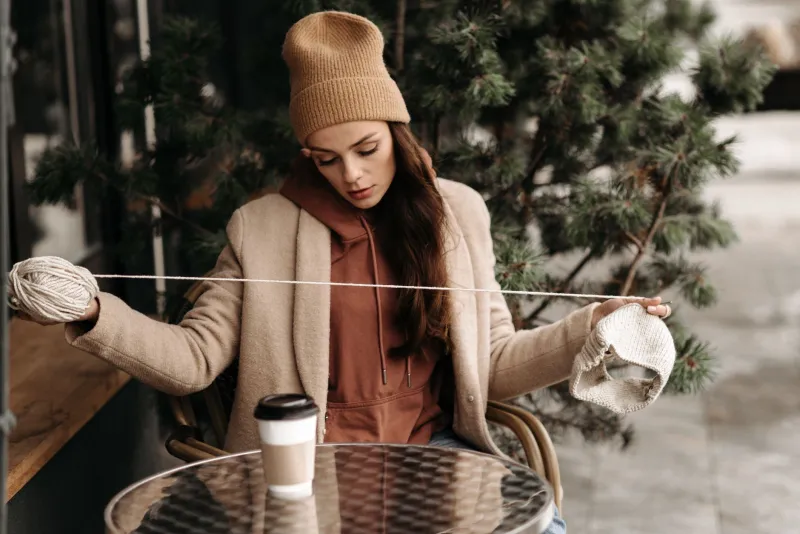
Hands On: The Neuroscience Behind Why Crafting Calms You Down Better Than Your Phone Ever Could
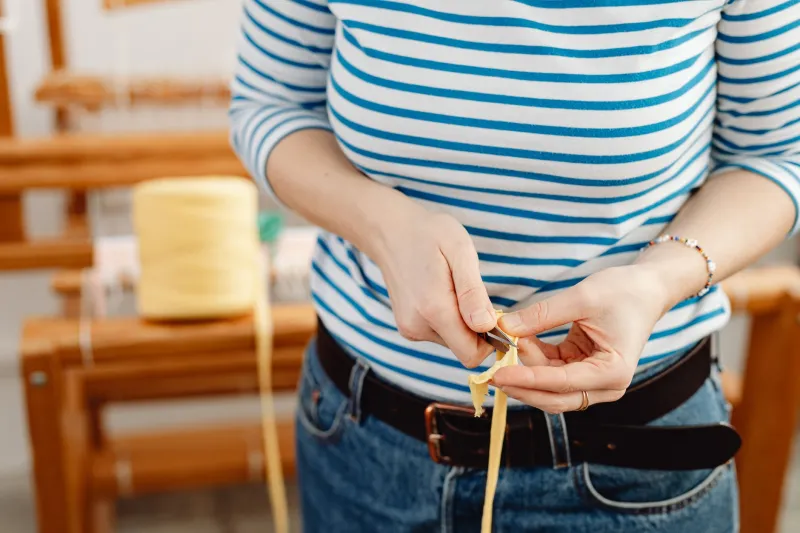
There's a specific kind of tired that doesn't go away after sleep. You know the one. It lives behind your eyes, hums somewhere in your chest, and makes doom-scrolling feel both pointless and impossible to stop. Millions of Americans, and Gen Z in particular, are clocking this feeling daily — and a growing number of them are reaching not for a meditation app or a prescription, but for a skein of yarn, a box of seed beads, or a loom the size of a picture frame.
It sounds almost too simple. But the neuroscience behind why hand-based crafts quiet an anxious nervous system is genuinely fascinating — and the evidence is stacking up in ways that are hard to ignore.
Your Body Has Two Modes, and One of Them Is Exhausted
To understand why weaving or knotting can feel like a full-body exhale, you need a quick primer on your autonomic nervous system. Think of it as having two settings: the sympathetic system, which handles your fight-or-flight response, and the parasympathetic system, which governs rest, digestion, and recovery. Modern life — with its notification pings, news cycles, and always-on work culture — keeps a lot of us stuck in sympathetic overdrive. We're running on cortisol fumes and calling it productivity.
The parasympathetic system, sometimes nicknamed the "rest and digest" mode, is what your body desperately wants to activate. And according to occupational therapists and neurologists, repetitive tactile activities are one of the most reliable ways to flip that switch.
"When you engage in rhythmic, hand-based tasks, you're essentially sending a message to your brain that you are safe," explains the general principle behind what OTs call sensory modulation. The repetitive motion — pulling thread through a loom, sliding a bead onto a wire, tying the same knot over and over — creates a predictable sensory loop that the nervous system interprets as non-threatening. Cortisol drops. Breathing slows. The body unclenches.
From Fidget to Flow: The Brain's Favorite Shortcut
Here's where it gets really interesting. Neuroscientists have long studied the concept of "flow state" — that absorbed, almost meditative zone where you're fully engaged in a task without the noise of anxious thought. Flow typically requires a task that is challenging enough to hold attention but not so difficult that it triggers frustration. Repetitive crafts, it turns out, are almost perfectly engineered for this.
The hands have an unusually dense concentration of nerve endings, which means they send a constant, rich stream of sensory data to the brain. When your fingers are occupied — feeling the texture of thread, the smooth cool of a glass bead, the resistance of a knot pulling tight — your brain's sensory cortex gets a workout. And a busy sensory cortex is a quieter prefrontal cortex, which is the region most associated with rumination, overthinking, and anxiety spirals.
In plain terms: your hands give your worried brain something better to do.
Occupational therapists have been applying versions of this logic for decades in clinical settings, using craft-based interventions for patients recovering from trauma, managing ADHD, or working through depression. What's newer is watching an entire generation apply the same principle instinctively, without any clinical instruction at all.
Gen Z Didn't Read the Research — They Just Started Weaving
Scroll through any corner of TikTok or Instagram where craft content lives, and you'll find young Americans describing their relationship to textile arts in language that sounds less like a hobby and more like a coping strategy. "I bead when I can't sleep." "Macramé is the only thing that stops my brain." "I started knotting during finals week and now I can't stop."
This isn't coincidental, and it isn't just aesthetic. Gen Z has grown up as perhaps the most digitally saturated generation in history, and they're also statistically among the most anxious. The American Psychological Association has consistently reported elevated stress and anxiety rates in adults under 35, with social media use frequently cited as a contributing factor. What's striking is that many young people seem to be self-correcting — trading screen time for string time — without anyone telling them to.
The irony is almost poetic: a generation raised on touchscreens is finding relief by going back to the most ancient kind of touch there is.
Why Scrolling Can't Compete
It's worth asking: why doesn't a phone do the same thing? After all, scrolling is also repetitive, and it definitely occupies the hands. The difference, neurologically speaking, is significant.
Digital interaction — especially social media — is designed to trigger variable reward responses, the same mechanism behind slot machines. Every scroll might deliver something exciting, alarming, funny, or infuriating. That unpredictability keeps the sympathetic nervous system engaged, not relaxed. Your body stays alert, scanning for the next hit of information.
Crafting, by contrast, offers predictable rewards. The bead goes on the thread. The knot holds. The row of weaving grows visibly longer. These are small, consistent wins that the brain processes as safe and satisfying, without the cortisol spike that comes from a heated comment section or a piece of bad news.
There's also the matter of completion. A finished bracelet, a knotted wall hanging, a beaded necklace — these are tangible objects that exist in the physical world. In an era when so much of our effort disappears into digital voids, making something you can hold carries a psychological weight that researchers are increasingly taking seriously.
The Quiet Prescription Nobody Is Selling You
None of this means crafting is a cure-all, and it would be reductive to suggest that anxiety disorders or chronic stress can be resolved with a loom and some embroidery thread. But as a complement to other strategies — therapy, movement, sleep, community — hand-based hobbies occupy a genuinely useful lane.
What makes the current moment interesting is that the uptake is happening organically, driven by cultural momentum rather than any top-down wellness campaign. Craft supply stores across the US have reported significant sales increases among younger shoppers. Community weaving circles and bead-work meetups are popping up in cities from Portland to Pittsburgh. The craft isn't the point, exactly — the nervous system reset is.
And maybe that's the most compelling thing about all of this. In a wellness industry worth billions, where every solution comes with a subscription fee and a branded water bottle, the thing quietly working for a lot of people costs about twelve dollars in yarn and requires nothing more than a pair of hands and a little patience.
Your nervous system has been asking for this for a while. It just didn't know how to send the notification.