Every Bead Tells a Story: Why Strung Accessories Are the New Language of Identity
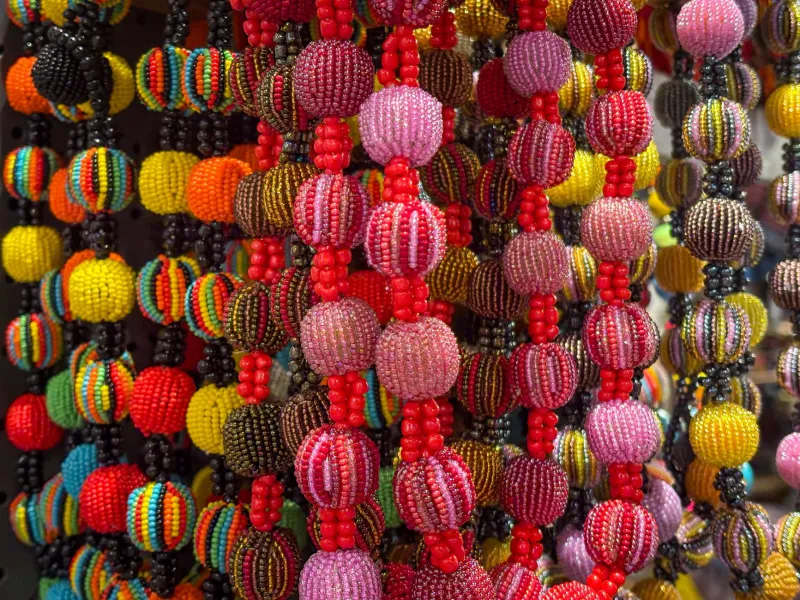
There's something almost meditative about the act of stringing beads. One by one, a pattern emerges — colors chosen deliberately, materials sourced carefully, shapes arranged with intent. The finished piece isn't just jewelry. It's a sentence. Sometimes it's a whole novel.
Right now, across American fashion — from Brooklyn flea markets to LA boutiques to small Etsy shops run out of living rooms in Albuquerque — beaded and strung accessories are experiencing a full-on renaissance. And the reasons why are a lot more layered than a simple aesthetic cycle.
More Than a Mood Board Moment
Let's be honest: trends come and go fast. One season it's chunky gold chains, the next it's dainty minimalism. But beaded jewelry keeps showing back up, and this time it feels different. It feels rooted.
For Gen Z especially, the appeal isn't just visual. It's about meaning-making. In a cultural moment where personal identity is constantly being negotiated — online and off — what you wear has become a kind of shorthand. A beaded bracelet in specific colors can signal community membership, spiritual belief, cultural heritage, or just a vibe you're cultivating. Sometimes all four at once.
Millennials, meanwhile, are reconnecting with craft traditions they may have encountered as kids — friendship bracelets at summer camp, seed bead kits from the craft store — and discovering that those same techniques carry serious historical and cultural weight when you start pulling the thread.
Ancient Techniques, Contemporary Hands
Beading as an art form is ancient and genuinely global. Native American tribes across North America developed intricate beadwork traditions using materials like porcupine quills, shells, and eventually trade beads introduced through European contact. In West and Central Africa, beaded regalia has long communicated social status, spiritual power, and community belonging. Southeast Asian traditions — from the Hmong in Laos and Vietnam to the Dayak peoples of Borneo — incorporate beading into ceremonial garments with patterns that function almost like written language.
These aren't dusty historical footnotes. They're living practices, and increasingly, they're being carried forward by a new generation of makers who are very intentional about what they're doing and why.
Takoda Whitehorse, a Lakota Sioux beadwork artist based in Denver, started selling his pieces online during the pandemic. "I grew up watching my grandmother bead," he says. "When I started doing it myself, it wasn't about fashion — it was about keeping something alive. But then people started finding my work and responding to it, and I realized there was real hunger out there for things that mean something."
His designs pull from traditional Lakota geometric patterns but are applied to contemporary accessories — phone cases, sneaker charms, hair clips. The result feels both ancient and completely of-the-moment.
The Appropriation Conversation Nobody Wants to Skip
Here's where things get complicated, because they have to.
As beaded jewelry has entered mainstream fashion consciousness, so has the inevitable wave of mass-market knockoffs — fast fashion brands selling "boho bead" sets with zero acknowledgment of where those aesthetics originated. Festival culture has long had a complicated relationship with Native American-inspired accessories in particular, and the critique hasn't gone away just because the conversation has gotten louder.
The line between appreciation and appropriation is genuinely blurry for a lot of people, and that's not entirely bad — it means people are actually thinking about it. The more useful framework, according to many Indigenous and BIPOC makers, isn't about policing who can wear what. It's about sourcing.
Are you buying from the communities whose traditions you're drawn to? Are you paying fair prices that reflect genuine craft labor? Are you educating yourself about what a design actually means before you put it on your body?
Nadia Osei, a Ghanaian-American jewelry designer in Atlanta who works with Krobo beads — a traditional Ghanaian glass bead style — puts it plainly: "When someone buys my work, they're not just getting a pretty necklace. They're getting a connection to a tradition that goes back generations. That matters. A $5 Amazon version of the same thing doesn't carry any of that. It just takes the look and leaves the meaning behind."
The Maker Economy Is Changing the Story
One genuinely exciting shift in this whole landscape is how platforms like Etsy, Instagram, and TikTok have given independent makers unprecedented reach. Artists who might have previously been limited to local markets or craft fairs can now build national — even global — audiences.
This matters because it means consumers actually can buy directly from source communities if they want to. The infrastructure exists now in a way it didn't even ten years ago. A quick search turns up Navajo beadwork artists, Nigerian waist bead makers, Filipino artisans working in traditional styles — all selling directly, all able to tell their own stories in their own words.
And the stories are compelling. That's part of what's driving the resurgence. People are tired of things that don't mean anything. They want objects with histories, with intention, with a human hand behind them.
Strung Together in More Ways Than One
There's something poetic about the fact that an accessory defined by connection — bead to bead, strand to strand — has become a symbol of how people are trying to connect to culture, to heritage, to each other.
Whether it's a stack of seed bead bracelets that a teenager made while watching YouTube tutorials, a Krobo bead necklace purchased directly from an Accra-based artisan, or a pair of beaded earrings handmade by a Lakota artist in Denver — these pieces are doing something fashion doesn't always get credit for. They're holding memory. They're carrying identity.
And in a world where so much feels disposable and surface-level, that's not nothing. That's actually kind of everything.
So next time you reach for that beaded bracelet or layered necklace, take a second. Ask where it came from. Ask what it means. The answer might surprise you — and it might make you want to wear it even more.